
SETS: LLMs and Handwritten Archival Documents
Preliminary work on the development of SETS began in the Spring of 2025 when the team was awarded a Propel grant from the Dean of Research at Stanford University. The Propel grant funded experiments to improve efficiency in learning from archival handwritten sources, a complex and time-consuming task that severely constrains the scope of research agendas.
</section>
The Propel funded work launched us into a more refined set of experiments. The following pages link to sets of analysis reports: We examined approaches to scaling the analysis of several archival images. This operationrequired defining: 1. the components of scholarly analysis; and 2. the dimensions to be considered when designing evaluation metrics. Our first step was creating a benchmark for human-model interaction in the analysis of handwritten archival sources (Lee et al, 2024). This evaluation framework aims to improve upon existing benchmarks for multi-modal models by taking a handwritten archival and focused approach rather than a broader but flatter approach (Yue et al, 2024). Our framework attends to the complexity of handwritten archival sources as textual, visual, and physical objects, while also taking into account the theoretical and methodological approaches of the scholar. Whereas existing benchmarks address general reasoning capabilities, we offer a benchmark for handwritten archival sources that evaluates models on an actual workflow, measuring real task completion rather than using proxy metrics. Our benchmark design is grounded in the following assumptions: We propose a real-world benchmark based on an expert analysis of handwritten archival sources. We address the critique that most benchmarks test breadth over depth by assuming that AI and scholars will work in collaboration. We address concerns that current benchmarks do not adequately present real-world relevant tasks by testing with an actual use case employing actual source materials (see examples here), rather than artificial tasks or generated images. Read the report. For many archives professionally produced digital images do not exist. Rather, scholars often enter archives with their own digital camera and are permitted to photograph documents themselves under sufficient but not ideal lighting conditions. The images for this case study were acquired this way. We experiment with existing methods to improve machine-readability of photographed archival manuscripts. We arrive at: 1. a merely adequate expedient method and 2. a preferred method that is computationally costly. Further work will need to be done to improve upon this preferred method. Read the report. This experiment measures how the models’ answers to a set of questions posed about 39 document images compare to the ground truth. For each image there were three runs across the frontier models: Claude Opus, GPT 5.2, Gemini 2.5 Pro, Gemini 3.1 Pro, and Claude Opus with thinking. Read the report. · View analyses This experiment builds on 1.1 and 1.3 to complete a manual, close evaluation of how LLMs fare when provided with expert scholarly guidance. We ran this experiment over the same 39 handwritten archival source documents used in 1.3 and we evaluate the same range of LLMs’ responses to the 22 questions. The difference is that we provide the LLMs with guidance established in 1.1. Read the report. · View analyses This experiment extends 1.3 and 1.4 from question answering to structured data extraction, asking models to populate a 9-field per-traveler schema (name, titles, dates, place of stay, family, origin, etc.) for three representative pages spanning page density (10, 18, and 37 travelers). Each (model, page) is run under three phases — naive, guided, and guided + transcription — for 10 runs each. View analysesPhase II: Completed June 2026
Phase I, Completed November 2025
Experiments and Outcomes
for archival document understanding]
B1[Comparison of methods and models
for document digitization]
C1[Measure confidence, entropy, and accuracy
on 21 information retrieval tasks
across three frontier models]
D1[Evaluate scholar-language model
interaction on analysis tasks]
E1[Structured per-traveler extraction
across naive, guided, and
guided + transcription phases]
A -.-> A1
B -.-> B1
C -.-> C1
D -.-> D1
E -.-> E1
style A fill:#e1f5fe
style B fill:#f3e5f5
style C fill:#e8f5e8
style D fill:#fff3e0
style E fill:#fce4ec
Propel Experiment 1.1: Handwritten Archival Source Analysis
Propel Experiment 1.2: Image pre-processing
Propel Experiment 1.3: Naive Handwritten archival Source Analysis
Propel Experiment 1.4: Expert-directed Handwritten archival Source Analysis
Propel Experiment 1.5: LLM Data Extraction
The Handwritten archival Source Analysis research team
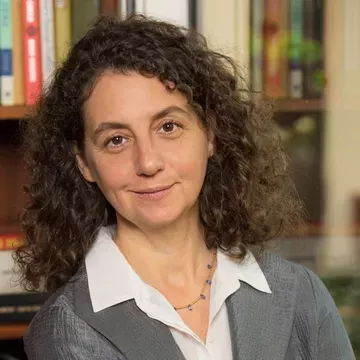 Giovanna Ceserani
Principal Investigator
Stanford University
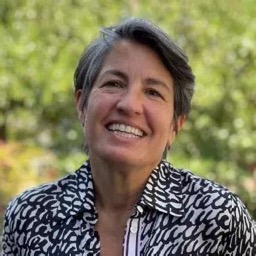 Nicole Coleman
Independent
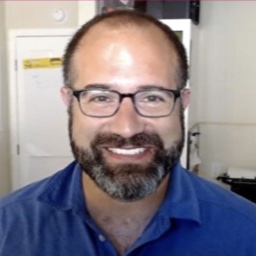 Allen Romano
Independent
 Huijun Mao
Stanford University
 Teresa Ceserani
Independent
Consultants
 Diyi Yang
Stanford University
 Sebastian Ahnert
Cambridge University
 Michele Mauri
Politecnico di Milano, DensityDesign
References